Context for the film.
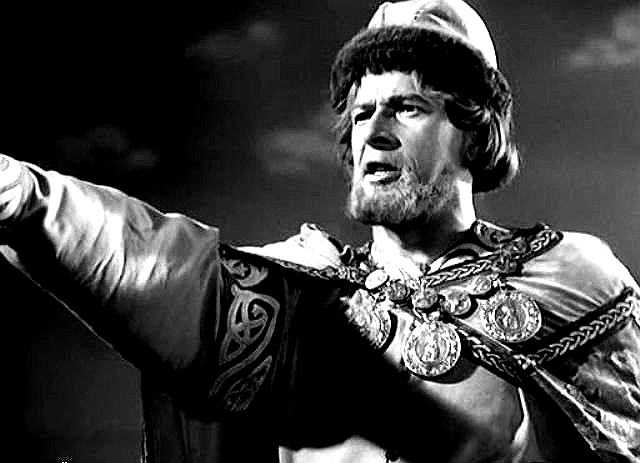
Sergei Eisenstein made the film in 1938. The film served Stalin's turn to National-Bolshevik ideology in the 1930s.
American historian David Brandenberger describes Stalinist National Bolshevism.
Fusion of Nationalism and Bolshevik Ideology: Brandenberger argues that Stalin and the Soviet leadership increasingly incorporated elements of Russian nationalism into Bolshevik ideology in the 1930s and 1940s. This was partly a pragmatic response to the challenges of mobilizing the Soviet population for industrialization, war, and loyalty to the state.
Pragmatic Shift from Internationalism to Nationalism: Initially, Bolshevik ideology emphasized international proletarian solidarity. However, as the Soviet Union faced internal and external threats (e.g., the rise of Nazi Germany), the leadership adopted nationalist rhetoric to appeal to Russian pride, historical achievements, and cultural heritage.
The film uses folklore and medieval hagiography of prince-saint-warrior for propaganda purposes. Eisenstein celebrates the medieval prince as the charismatic medieval military leader who anticipates Stalin as the modern leader of Russians. Prince Nevsky reeducates the people of Novgorod, who initially believe in republican principles but learn to love the strong leader when threatened by German knights.
The film is both an example of propaganda cinema and adheres to socialist realist master plot: the people of Novgorod is a collective positive hero undergoing reeducation under mentorship of charismatic leader.